Selasa, 11 Januari 2011

Ammonites Dined On Plankton

The Role of Ammonites in the Mesozoic Marine Food Web Revealed by Jaw Preservation. I. Kruta, et al. Science 331: 70-72.

Powerful new synchrotron scans of Baculites fossils suggests that the extinct group of marine invertebrates to which they belong, the ammonites, had jaws and teeth adapted for eating small prey floating in the water.
One ammonite also provided direct evidence of a planktonic diet because it died with its last meal in its mouth—tiny larval snails and crustacean bits.
Ammonites are extinct relatives of the squid and octopus; the Nautilus is similar in appearance to many ammonites but is a more distant relative. Ammonites appeared about 400 million years ago (the Early Devonian) and experienced an explosive radiation in the early Jurassic.

Ammonite jaws lie just inside the body chamber. New scans of Baculites, a straight ammonite found worldwide, confirms older research that ammonites had multiple cusps on their radula, a kind of tongue covered by teeth that is typical of mollusks. The radula can now be seen in exquisite detail: the tallest cusp is 2 mm high, tooth shape varies from saber to comb-like, and teeth are very slender. The jaw is typical of the group of ammonites (the aptychophorans) to which Baculites, belongs.

"Our research suggests several things. First, the radiation of aptychophoran ammonites might be associated with the radiation of plankton during the Early Jurassic," says Landman. "In addition, plankton were severely hit at the Cretaceous-Tertiary boundary, and the loss of their food source probably contributed to the extinction of ammonites." link
Kamis, 06 Januari 2011

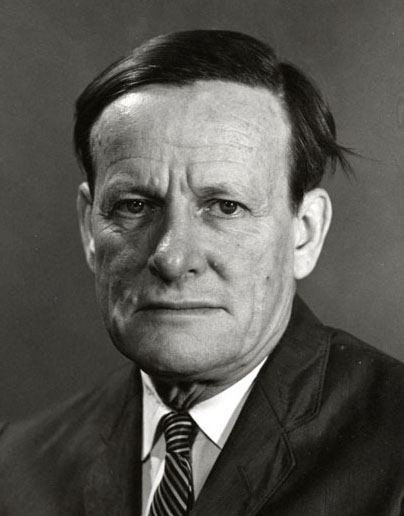
Born This Day: George Ledyard Stebbins

From the U Calif., Berkeley:

Along with Dobzhansky (1900 - 1975), animal systematist Ernst Mayr, and paleontologist George Gaylord Simpson (1902 - 1984), Stebbins (Jan. 6, 1906 - Jan. 19 2000) is considered one of the "architects" of the modern evolutionary synthesis of the 1930s and 1940s, an intellectual watershed and historic turning point that brought together research in cytology, genetics, systematics, paleontology into a common evolutionary framework. This synthesis, which had the effect of reconciling the often opposing views of laboratory-oriented geneticists and natural history oriented systematists, made Charles Darwin's theory of evolution by natural selection the centerpiece of the new discipline of evolutionary biology.

In this role, Stebbins is credited with bringing a modern framework to the study of plant evolution, and he is perhaps best known for his book Variation and Evolution in Plants, published by Columbia University Press (NY) in 1950. In the 1940s, Stebbins also played an important role in organizing the nascent Society for the Study of Evolution, of which he became the third president in 1948, and used his position to speak out for the botanical side of evolutionary studies, a field that had been dominated by zoologists. Photo .

Died This Day: Gregor Mendel

From Today In Science History:

Mendel (July 22, 1822 – Jan. 6, 1884) was an Austrian pioneer in the study of heredity. He spent his adult life with the Augustinian monastery in Brunn, where as a geneticist,
botanist and plant experimenter, he was the first to lay the mathematical foundation of the science of genetics, in what came to be called Mendelism.

Over the period 1856-63, Mendel grew and analyzed over 28,000 pea plants. He carefully studied for each their plant height, pod shape, pod color, flower position, seed color, seed shape and flower color. He made two very important generalizations from his pea experiments, known today as the Laws of Heredity. Mendel coined the present day terms in genetics: recessiveness and dominance.
Related Posts Plugin for WordPress, Blogger...